Singapore Business Visa

Offshore services
Bundled Services
Top Citizenship & Residency
Articles & Research
About Us
Contact Us


.svg)


Trusted by Global Clients & Partners


July 16, 2026
6
min read

Panama Special Passport 2026: How It Differs From a Real Panama Passport

.svg)


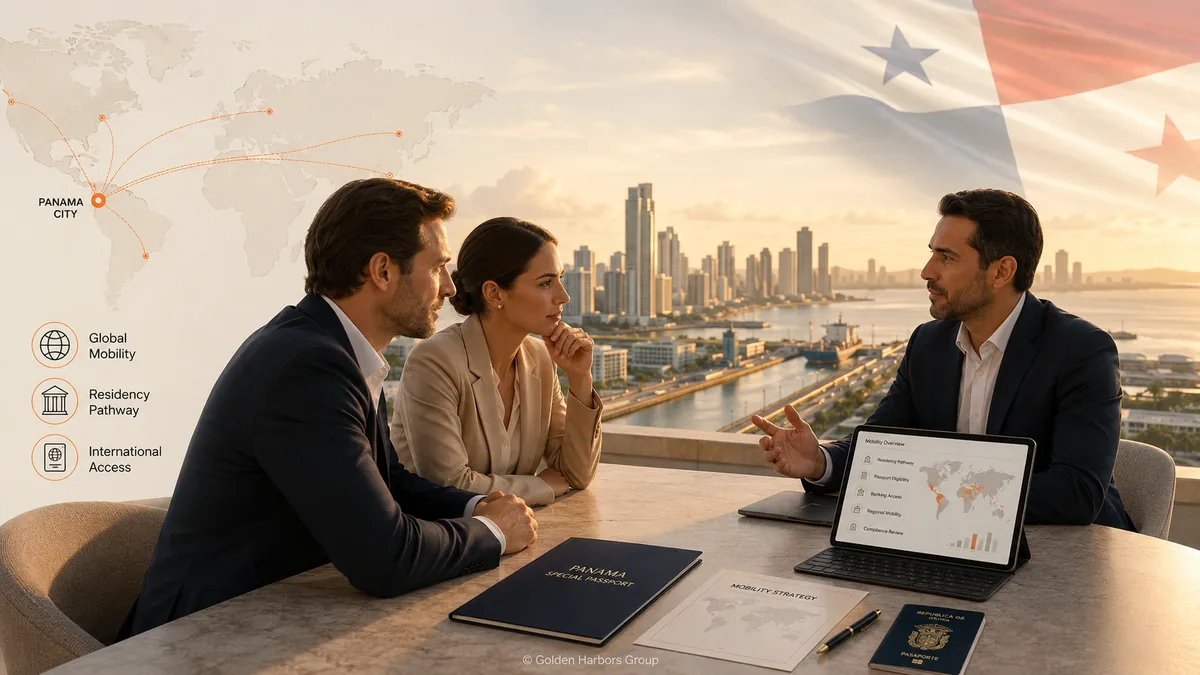
The Panama special passport is a travel document, not citizenship. Under Law No. 493 of October 28, 2025, permanent residents in the Qualified Investor category can obtain a Panamanian-issued passport valid only as long as their residency. A real Panama passport requires naturalization: five years of permanent residency, a Spanish test, and a discretionary presidential decree.
Key Takeaways
- The Panama special passport is a travel document for permanent residents. It does not grant Panamanian nationality, voting rights, or the citizen passport's visa-free treaty network.
- Law No. 493 of October 28, 2025 extended special passport eligibility to Qualified Investor permanent residents and their dependents, with validity tied to the residency permit.
- The older route runs through the Private Income Retiree visa, where the passport's validity is tied to a five-year certificate of deposit at Banco Nacional de Panama or Caja de Ahorros.
- A real Panama passport requires naturalization: 5 years of permanent residency (3 with a Panamanian spouse or child), Spanish and civics testing, and a discretionary presidential decree. Plan 6 to 8 years in practice.
- As of 2026 the citizenship passport ranks 25th on the Henley Passport Index with visa-free access to 147 destinations. The special passport carries none of those treaty rights.
Quick Facts: Panama Special Passport 2026
What Is the Panama Special Passport?
The Panama special passport is a travel and identification document that Panama issues to certain categories of permanent residents. It places the holder under Panamanian documentation for travel purposes without making them a Panamanian national.
Panama has issued special passports to select resident categories for years, most notably holders of the Private Income Retiree visa. The framework changed materially on October 28, 2025, when Law No. 493 was enacted. The law extends special passport eligibility to foreigners holding permanent residency under the Qualified Investor category and their dependents, ties the document's validity to the underlying residency permit, and mandates a government registry of all special passport holders. The law directed the Executive Branch to issue implementing regulations covering fees, procedures, and documentation within six months of promulgation, so applicants in 2026 should confirm the current fee schedule before filing.
The important framing from the first paragraph of any honest analysis: this document is often marketed online as a "Panama passport in months." That marketing conflates a residency benefit with citizenship. The two are legally different instruments with different rights attached.
Who Qualifies for the Special Passport in 2026?
Two resident categories qualify: Qualified Investor permanent residents (with dependents) under Law No. 493, and Private Income Retiree visa holders under the older framework. Each route carries its own investment mechanics and validity rules.
← Swipe →
| Criterion | Qualified Investor Route | Private Income Retiree Route |
|---|---|---|
| Legal basis | Law No. 493 of 2025; Executive Decree 722 of 2020 as amended by Decree 193 of 2024 | Private Income Retiree (Rentista Retirado) visa framework |
| Qualifying commitment | Real estate from USD 300,000 until October 15, 2026 (USD 500,000 thereafter), securities of USD 500,000, or a bank deposit of USD 750,000 | Five-year certificate of deposit at Banco Nacional de Panama or Caja de Ahorros sized to generate the qualifying monthly income |
| Residency timeline | Permanent residency in 30 to 45 business days | Permanent residency on visa approval |
| Passport validity | Tied to the residency permit's validity | Tied to the CD; cancellation or a lien on the CD voids both the passport and the residency |
| Dependents | Included under Law No. 493 | Principal applicant and dependents may apply |
The two routes differ less in what the passport is and more in how you keep it. On the investor route the document is anchored to a residency permit you renew on the ordinary schedule, so the passport stays valid as long as the permit does. On the retiree route the document is anchored to money: the certificate of deposit is both the qualifying condition and the on-off switch, which means a financial decision about the deposit is also, quietly, an immigration decision. Applicants who treat the CD as ordinary savings and move it are often surprised to learn they have cancelled their own residency.
For most new applicants in 2026, the Qualified Investor route is the practical entry point because it grants permanent residency in 30 to 45 business days and now carries the special passport benefit directly. The full residency mechanics, document checklist, and program comparison are covered in our Panama residency guide.
What Does the Special Passport Not Give You?
The special passport gives no nationality and no treaty travel rights. Every other limitation follows from those two.
- No citizenship. The holder remains a foreign national with an E-series resident cedula. The special passport changes the travel document, not the legal status.
- No political rights. No voting, no eligibility for public office, no rights reserved to Panamanian nationals.
- No visa-free treaty network. Panama's visa-waiver agreements apply to Panamanian citizens. A special passport holder's visa obligations continue to follow their underlying nationality, and each destination decides for itself whether to recognize the document at all.
- No independence from the residency. The document lives and dies with the underlying permit. On the retiree route, cancelling or encumbering the qualifying CD voids the passport and the residency together.
- No replacement of the home passport. Holders keep and travel on their national passport; the special passport is an additional document, not a substitute.
None of this makes the document useless. It is a legitimate convenience for identification, for banking, and for travel to destinations that recognize it. The problem is only the gap between what it is and how it is sold.
Which Countries Accept the Panama Special Passport?
There is no published treaty network for the special passport, and acceptance is decided destination by destination. Panama's visa-waiver agreements name Panamanian citizens, not Panamanian document holders, so the special passport does not inherit them.
In practice, holders should verify recognition with the destination country's consulate before every trip and should expect airlines to apply the visa rules of the holder's nationality at check-in. The reliable pattern is to travel with both documents: the national passport as the primary travel document and the special passport as supporting Panamanian identification. Any provider claiming a fixed list of "visa-free countries" for the special passport should be asked to produce the underlying bilateral agreements, because Panama's treaty partners publish their waivers by nationality.
How Do You Get a Real Panama Passport?
The only path to a real Panama passport is naturalization, and the final grant is discretionary. Panama has no citizenship-by-investment program, so no investment amount buys the citizen document directly.
- Obtain permanent residency. Any qualifying program works: Qualified Investor (30 to 45 business days to permanent residency), Friendly Nations, Private Income Retiree, or another category. Program selection is compared in our Panama residency overview.
- Hold the residency for the statutory period. Five years of permanent residency for most nationalities. Three years for applicants married to a Panamanian citizen or with a child born in Panama. Nationals of Spain and most Latin American countries qualify under reciprocity in 1 to 3 years depending on the country.
- File the naturalization petition. The application runs through the National Immigration Service and the Ministry of Government, with apostilled civil documents, clean criminal records, and proof of economic activity.
- Pass the tests. A live Spanish interview plus an examination on Panama's history, geography, and civic structure, conducted with Electoral Tribunal and Civil Registry involvement.
- Sign the renunciation affidavit. Article 13 of Panama's Constitution requires naturalizing citizens to renounce their prior nationality by sworn declaration. Panama rarely polices the renunciation afterward, and many home countries do not recognize it, so its practical effect depends entirely on the applicant's home-country law. Verify that position with counsel before filing.
- Receive the presidential decree. Citizenship is granted by discretionary presidential decree on the recommendation of the Ministry of Government. Processing after filing commonly runs 6 to 18 months, and there is no legal entitlement to approval.
End to end, applicants should plan 6 to 8 years from first arrival to holding the citizen passport. The investment-led version of this pathway, with current thresholds and costs, is detailed in our Panama citizenship by investment guide.
Special Passport vs Citizenship Passport: Side-by-Side
The two documents solve different problems. The special passport is a residency convenience available in months. The citizenship passport is a nationality earned over years.
← Swipe →
| Feature | Special Passport | Citizenship Passport |
|---|---|---|
| What it is | Travel and ID document for qualifying permanent residents | National passport of a Panamanian citizen |
| Legal basis | Law No. 493 of 2025; retiree visa framework | Naturalization under the Constitution; presidential decree |
| Nationality granted | None | Panamanian nationality |
| Time to obtain | Months (after permanent residency is granted) | 6 to 8 years from arrival in practice |
| Validity | Tied to the residency permit or the qualifying CD | Standard citizen passport validity, renewable for life |
| Visa-free travel | None by treaty; recognition varies by destination | 147 destinations, 25th on Henley (2026) |
| Voting and public office | No | Yes, per constitutional rules for naturalized citizens |
| Can be lost by | Residency lapse, CD cancellation or encumbrance | Narrow statutory grounds only |
| Testing required | None beyond residency due diligence | Spanish plus history, geography, and civics |
| Right to live and work in Panama | Yes, through the underlying residency permit | Yes, as a national with no permit to maintain |
| Transmissible to children | No; children qualify only through their own residency | Yes; citizenship passes to children by descent |
| Consular protection abroad | Limited; the holder remains a foreign national | Full Panamanian consular protection |
| Renewal | Renews with the residency permit or the certificate of deposit | Standard passport renewal every 10 years (5 for minors) |
| US E-2 investor visa access | No; the treaty applies to Panamanian nationals | Yes; Panamanian citizens qualify under the US-Panama treaty |
| Best use case | Identification and travel convenience while a resident | Full second citizenship and long-term Plan B |
Read the table top to bottom and a pattern emerges: nearly every row where the special passport says "no" or "tied to" is a row where the citizenship passport says "yes" or "permanent." That is the whole distinction in miniature. The special passport is a document you hold; the citizenship passport is a status you are. The first is convenient and quick and conditional. The second is slow and demanding and, once granted, effectively unconditional. Neither is better in the abstract; they answer different questions, and the applicant who is clear about which question they are asking rarely regrets the choice.
How Much Does Each Pathway Cost?
The special passport adds a modest document fee on top of residency costs, while the citizenship passport costs little in government fees but requires years of maintained residency. On the investor route, the real spend is the qualifying investment itself: from USD 300,000 in real estate until October 15, 2026 (USD 500,000 thereafter), USD 500,000 in securities, or USD 750,000 on deposit, plus legal and filing fees. On the retiree route, the cost is the capital locked in the five-year CD. The special passport's issuance fee is set by the implementing regulations under Law No. 493, so confirm the current schedule at filing. Naturalization itself involves filing fees, translations, apostilles, and legal fees rather than any qualifying investment, which is why its true cost is time and physical presence rather than capital.
Is the Panama Special Passport Worth It?
For a Qualified Investor resident, yes, as a convenience collected along the way; as a substitute for citizenship, no. The document is worth holding because it costs little beyond the residency the applicant already wanted, formalizes Panamanian identification for banking and travel, and signals settled status. It is the wrong purchase for anyone whose actual goal is visa-free mobility or a second nationality, because it delivers neither. Applicants with that goal should plan the naturalization track from day one: the five-year clock starts at permanent residency, and choices made at entry (program, physical presence, Spanish preparation) determine whether year six produces a citizen passport or a stalled file.
Common Mistakes and Marketing Traps
Victoria Cold, European Attorney at Golden Harbors, notes: "Half the Panama files we review start with a client who was sold a passport and actually bought a residency. The special passport is genuinely useful, but it is an identity and travel convenience, not a nationality."
- Believing the special passport is a second citizenship. It is not. Nationality in Panama comes only through birth, descent, or naturalization by presidential decree.
- Assuming visa-free travel transfers. Panama's visa-waiver treaties apply to citizens. Special passport holders travel on their nationality's visa rules unless a destination individually recognizes the document.
- Letting the qualifying CD lapse on the retiree route. Cancelling or encumbering the deposit voids the special passport and the residency in one stroke.
- Ignoring the naturalization clock. Residents who want the real passport often lose years by not tracking physical presence and by starting Spanish preparation too late. The naturalization interview is conversational but live.
- Assuming dual citizenship is automatic. The Article 13 renunciation affidavit is mandatory at naturalization. Panama rarely enforces it afterward, but whether the original nationality survives depends on the home country's law, not Panama's practice. Verify before filing, especially for nationalities where renunciation declarations carry real effect.
Frequently Asked Questions
Is the Panama Special Passport a Second Citizenship?
No. The special passport is a travel and identification document issued to qualifying permanent residents under Law No. 493 of 2025 and the retiree visa framework. The holder remains a foreign national. Panamanian citizenship is acquired only through birth, descent, or naturalization completed by a discretionary presidential decree.
Who Can Apply for the Panama Special Passport in 2026?
Two categories qualify as of July 2026: permanent residents under the Qualified Investor category and their dependents, per Law No. 493 of October 28, 2025, and holders of the Private Income Retiree visa, whose document is tied to a five-year certificate of deposit at Banco Nacional de Panama or Caja de Ahorros.
Does the Special Passport Give Visa-Free Travel to Europe?
No. Panama's visa-waiver agreements, including Schengen access, apply to Panamanian citizens. A special passport holder's visa obligations follow their underlying nationality, and each destination decides individually whether to recognize the document. Holders should verify recognition with the destination's consulate before travel and expect airlines to apply their nationality's rules.
How Long Is the Panama Special Passport Valid?
Validity is tied to the underlying status. On the Qualified Investor route, the document runs with the residency permit under Law No. 493. On the Private Income Retiree route, it runs with the five-year certificate of deposit, and cancelling or encumbering the CD voids both the passport and the residency.
How Do You Get Full Panamanian Citizenship?
Through naturalization only. The standard requirement is five years of permanent residency, reduced to three years for applicants married to a Panamanian citizen or with a Panamanian-born child, and to 1 to 3 years for nationals of Spain and most Latin American countries under reciprocity. Applicants pass a Spanish and civics examination, sign the renunciation affidavit, and await a discretionary presidential decree.
Does Panama Allow Dual Citizenship?
Formally, naturalizing citizens must renounce their prior nationality by sworn affidavit under Article 13 of the Constitution. In practice Panama rarely enforces the renunciation, and many home countries do not recognize it, so most naturalized citizens retain their original passport. The outcome depends on the home country's law, and applicants should verify their position with counsel before filing.
How Strong Is the Real Panama Passport in 2026?
The Panamanian citizen passport ranks 25th on the Henley Passport Index as of 2026, with visa-free or visa-on-arrival access to 147 destinations, including the Schengen Area and the United Kingdom. The special passport carries none of these treaty rights.
Can You Lose the Special Passport?
Yes, and more easily than a citizen passport. The document is voided when the underlying residency lapses. On the retiree route, cancelling the qualifying certificate of deposit or placing a lien on it invalidates the passport and the residence status together. Citizenship, by contrast, can be lost only on narrow statutory grounds.
How Golden Harbors Helps
Golden Harbors advisors work with founders, family principals, and retirees separating Panama's marketing claims from its legal instruments. We map whether the special passport, the naturalization track, or both fit the client's actual mobility and Plan-B goals, sequence the Qualified Investor or retiree entry accordingly, and structure the file so the five-year citizenship clock is never wasted.
For applicants moving forward, we coordinate the residency application end to end, prepare the documentation and source-of-funds file to Panama's tightened AML standards, and plan the naturalization prerequisites (physical presence, Spanish preparation, civil documents) from day one rather than year five.
You have read what the documents actually do; now pick the right one. Book a general consultation call with Golden Harbors, global mobility experts who walk you through the Panama special passport, the residency entry, and the naturalization timeline for your specific situation.
Book a CallAbout the Author
Victoria Cold, European Attorney at Golden Harbors, is an international lawyer and author of academic papers on corporate and immigration law. She holds multiple law degrees and speaks four languages, with deep coverage across Europe, the Middle East, and Asia. At Golden Harbors, she advises entrepreneurs, family offices, and international clients on cross-border structuring, residency, and citizenship-by-investment programs.
Last reviewed: July 2026.
Disclaimer: This article is for informational purposes only and does not constitute legal, tax, or immigration advice. Program terms, tax rates, and regulatory requirements change frequently. Verify current requirements before acting.
There are Always Options to EXPAND YOUR BOUNDARIES! Let's Discuss Yours
Every client is unique
Every case requires an individual approach and solution. Our years of experience in the industry allow us to provide both.
We will answer all your questions and provide detailed information about the available second passport and residency programs to help you make the right choice.
Victoria
Lead Attorney at Golden Harbors

Victoria
Lead Attorney at Golden Harbors
Read also

