Singapore Business Visa

Offshore services
Bundled Services
Top Citizenship & Residency
Articles & Research
About Us
Contact Us


.svg)


Trusted by Global Clients & Partners


May 14, 2026
6
min read

Panama Digital Nomad Visa 2026: Requirements, Income, Cost & Taxes

.svg)


1.2K

1.2K
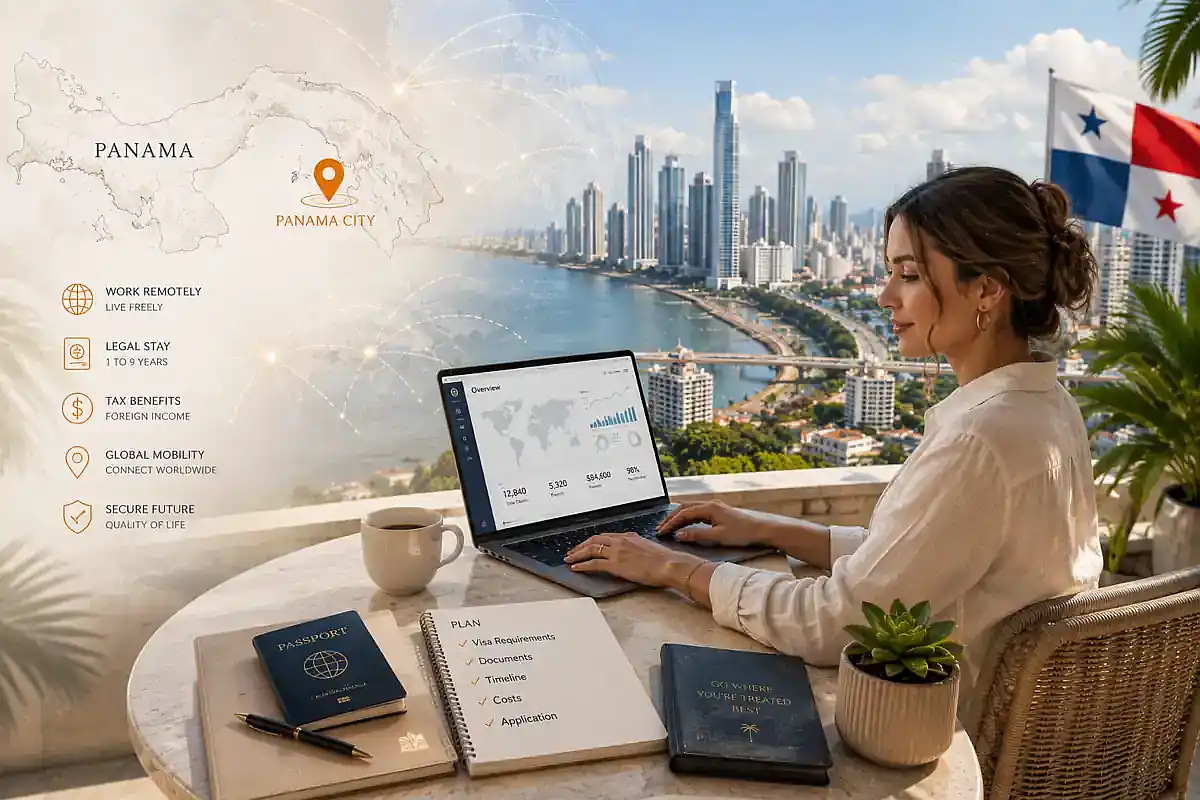
The Panama Digital Nomad Visa allows eligible remote workers, freelancers, consultants, and online entrepreneurs to live in Panama while working for foreign employers or clients. In 2026, the program remains attractive because of Panama’s territorial tax system, U.S. dollar economy, modern infrastructure, strategic time zone, and clear short-stay remote worker rules. This guide explains the requirements, income threshold, documents, costs, timeline, tax treatment, renewal options, and application process.
Why Panama Is a Top Choice for Digital Nomads in 2026
Digital nomadism allows professionals to live abroad while continuing to work remotely for companies or clients located anywhere in the world. This lifestyle reflects the modern shift toward location-independent work, enabling individuals to combine their careers with international travel and cultural exploration.
Panama has become an increasingly attractive destination for remote professionals thanks to its stable economy, strategic location, and high quality of life. Many digital nomads choose Panama as their base while working remotely for the following reasons:
- Affordable Cost of Living
While Panama is more developed than many countries in the region, it still offers a relatively affordable lifestyle compared with major cities in North America or Western Europe. Digital nomads can enjoy comfortable living standards at moderate costs. Monthly expenses (according to Numbeo) for a single person typically range around USD 800–1,000 excluding rent, depending on lifestyle. Rent for a one-bedroom apartment in Panama City averages approximately USD 700–1,200 in the city center, while housing outside central districts can be significantly cheaper. Everyday expenses such as transportation, groceries, and dining remain reasonably priced compared to many global business hubs.
- Modern Urban Infrastructure
Panama City, the country’s capital and economic center, provides modern infrastructure and a vibrant urban lifestyle. The city features contemporary residential towers, international restaurants, shopping malls, and entertainment districts. Neighborhoods such as Casco Viejo, Punta Pacífica, and El Cangrejo are particularly popular among expatriates and remote workers due to their walkability, coworking spaces, and easy access to services.
- Reliable Internet Connectivity
Panama offers reliable high-speed internet, particularly in major cities and digital-nomad-friendly neighborhoods. Fiber-optic connections are widely available in Panama City and other urban areas, supporting video calls, cloud-based work, and other professional online activities. Internet plans typically cost around USD 30–60 per month, depending on speed and provider.
- Welcoming International Community
Panama has a long history as an international hub due to the Panama Canal, global shipping, and multinational business presence. As a result, the country hosts a large expatriate community and is accustomed to welcoming foreign residents. Many locals speak at least basic English, particularly in business districts and tourist areas, making everyday life easier for newcomers.
- Thriving Coworking Scene
Remote professionals in Panama can take advantage of a growing number of coworking spaces. Facilities such as Selina Cowork, Workings, and My Office Panama offer modern workspaces, high-speed internet, meeting rooms, and networking opportunities for entrepreneurs, freelancers, and remote employees. These environments help digital nomads stay productive while building professional connections.
- Diverse Natural Landscapes
Panama offers remarkable geographic diversity within a relatively small territory. Digital nomads can explore tropical beaches, rainforests, mountains, and islands without traveling far from the capital. Popular weekend destinations include Bocas del Toro, San Blas Islands, Boquete, and the Pearl Islands, providing opportunities for surfing, hiking, diving, and eco-tourism.
- Rich Cultural and Entertainment Options
Panama combines Latin American culture with global influences. The country hosts a variety of cultural festivals, concerts, and social events throughout the year. In Panama City, digital nomads can enjoy historic architecture, vibrant nightlife, international cuisine, and waterfront promenades, creating a balanced lifestyle beyond work.
- Strategic Location for Travel
Panama’s geographic location makes it a convenient travel hub for exploring both North and South America. Tocumen International Airport is one of the region’s largest aviation hubs, offering direct flights to dozens of international destinations. This accessibility allows digital nomads to easily travel across the Americas while maintaining Panama as their base.
- Quality Healthcare Services
Panama offers modern private healthcare facilities and internationally trained doctors, particularly in Panama City and other major urban centers. Many hospitals meet international standards and provide services to expatriates and medical tourists. Healthcare costs are generally lower than in the United States while maintaining high-quality medical services. According to the Numbeo Health Care Index, Panama scores around 70 points, indicating a relatively high level of healthcare quality compared with many countries in the region.
- Convenient Time Zone
Panama operates on Eastern Standard Time (UTC-5) and does not observe daylight saving time. This time zone aligns well with business hours in the United States, Canada, and much of Latin America, making it convenient for remote professionals working with international teams.
- Safety and Stability
Panama is considered one of the most politically and economically stable countries in Central America. Its long-standing democracy, dollarized economy, and strong financial sector contribute to a secure and predictable environment for residents and businesses.
According to the Global Peace Index 2025, which evaluates 163 countries based on factors such as societal safety, internal conflict, and militarization, Panama ranks 84th globally with a peace score of approximately 2.01.
- Spanish and English Language Environment
Spanish is the official language, offering an excellent opportunity for digital nomads to learn or improve their Spanish through everyday interaction. At the same time, English is widely used in business, tourism, and expatriate communities, making it relatively easy for newcomers to adapt.
- Diverse Culinary Scene
Panama’s cuisine reflects a mix of Latin American, Caribbean, and international influences. Digital nomads can enjoy fresh seafood, tropical fruits, traditional Panamanian dishes such as ceviche, sancocho, and patacones, as well as a wide variety of international restaurants in Panama City.
This blend of modern infrastructure, natural beauty, cultural diversity, and international connectivity makes Panama an appealing destination for professionals seeking a dynamic and comfortable base for remote work.
What Is the Panama Digital Nomad Visa?
Panama introduced its Digital Nomad Visa through Executive Decree No. 198 of May 7, 2021, which established the Short-Stay Visa for Remote Workers within the Non-Resident immigration category. The program was created to attract remote professionals who wish to temporarily reside in Panama while continuing to work for employers or clients located outside the country. By introducing this visa pathway, the Panamanian government aims to stimulate long-term tourism and position Panama as an appealing destination for location-independent professionals.
The visa allows foreign nationals to legally live in Panama while performing their professional activities remotely. Because the program targets individuals whose income is generated abroad, digital nomads are able to reside in the country without entering the local labor market or competing for domestic employment opportunities.
The program forms part of Panama’s broader strategy to attract international professionals and strengthen its reputation as a regional business and innovation hub. With its strategic location connecting North and South America, modern infrastructure, stable banking system, and high level of connectivity, Panama offers a favorable environment for remote workers and entrepreneurs.
Panama Digital Nomad Visa Requirements
To qualify for the Panama Digital Nomad Visa, applicants must meet several key requirements:
- Employment or Professional Activity Abroad. Applicants must demonstrate that they work remotely for a foreign company of a transnational nature or operate as self-employed professionals providing services to clients outside Panama. The work must be performed remotely and should not involve employment with a Panamanian company.
- Remote Work Conducted for Foreign Clients or Employers. The applicant’s professional activities must generate economic value outside Panama. In practice, this means that the services, projects, or employment responsibilities must primarily affect companies or clients abroad.
- Minimum Foreign Income Requirement. Applicants must prove stable income from abroad of at least USD 36,000 per year (or the equivalent in another currency). This requirement ensures that digital nomads have sufficient financial resources to support themselves during their stay in Panama.
- Health Insurance Coverage
Applicants must provide proof of valid health insurance covering the entire duration of their stay in Panama. The insurance should ensure access to medical services and healthcare while residing in the country. - Clean Criminal Record
A police clearance certificate or background check from the applicant’s country of residence (or citizenship) may be required to confirm that the applicant has no criminal record. - Proof of Residential Address
Applicants may also need to provide proof of a residential address in Panama, such as a lease agreement, hotel reservation, or other documentation confirming where they intend to stay during their time in the country.
Benefits of the Panama Digital Nomad Visa
The Panama Digital Nomad Visa offers a range of advantages for remote professionals who wish to live in Panama while continuing to work for foreign employers or clients. The program combines legal stability, a relatively simple application process, and the opportunity to experience one of Latin America’s most dynamic economies. Below are the main benefits of the Panama Digital Nomad Program.
- Legal Authorization to Live and Work Remotely
The visa grants foreign remote workers the legal right to reside in Panama while performing professional activities for employers or clients located outside the country. This ensures full compliance with Panamanian immigration regulations and eliminates the uncertainty of working while on a tourist status.
- Opportunity for an Extended Stay
The Panama Digital Nomad Visa allows eligible applicants to stay in the country for up to nine months, with the possibility of one additional nine-month extension. This extended timeframe enables digital nomads to experience Panama beyond short-term tourism, explore different regions of the country, and establish a comfortable lifestyle while maintaining their remote career.
- Clear and Predictable Eligibility Requirements
The program features transparent and well-defined eligibility criteria. Applicants generally need to demonstrate that they work remotely for a foreign employer or clients, earn stable income from abroad, maintain valid health insurance, and provide a clean criminal record. Because the requirements are clearly outlined, applicants can prepare their documentation in advance and navigate the process with greater certainty.
- Streamlined Application Process
The application procedure is relatively straightforward compared with many other immigration pathways. With the assistance of a licensed Panamanian attorney, applicants can submit the required documentation to the immigration authorities and typically receive a decision within a defined timeframe (less than 2 months). This structured process makes Panama an accessible destination for professionals seeking a legal base for remote work.
- Competitive Costs
Compared to similar digital nomad programs worldwide, the Panama Digital Nomad Visa is considered cost-effective (e.g. the government fee is around USD 300). Application fees, legal services, and document processing costs are generally moderate, making the program financially accessible for many remote professionals.
- Favorable Tax Environment
Digital nomads working for foreign employers or clients typically earn income generated outside Panama. Because Panama applies a territorial tax system, foreign-sourced income is generally not taxed in Panama. This can create a favorable financial environment for remote workers, allowing them to maintain international income streams while enjoying the lifestyle benefits of living in Panama.
Panama Digital Nomad Visa Tax Rules
Panama applies a strict territorial tax system, meaning that only income derived from Panamanian sources is taxed. For most digital nomads working remotely for foreign clients, income is generally treated as foreign-sourced, provided the services are used abroad, and is therefore not subject to tax in Panama. This creates a favorable environment for freelancers, consultants, developers, and online entrepreneurs serving international markets.
Income is considered local-source (and taxable) if it relates to:
- Services used or economically exploited in Panama
- Business activities carried out within Panama
- Income from assets, property, or rights located or used in Panama
If taxable, individual income is subject to progressive rates ranging from 0% to 25%. Panama does not tax foreign-earned income, wealth, or inheritance, which further strengthens its appeal for globally mobile professionals.
Digital nomads seeking formal tax residency may apply for a Tax Residence Certificate through the Dirección General de Ingresos (DGI). Requirements typically include:
- Proof of physical presence or economic ties, such as:
- Remaining physically present in Panama for more than 183 days, either continuously or intermittently, during the current fiscal year or the immediately preceding year; or
- Establishing permanent housing in Panama and demonstrating a centre of vital interests there (e.g., family residence, primary economic activities, or substantial personal ties).
- Tax registration (RUC number)
- Filing compliance
Processing usually takes 2–6 weeks. Those operating through Panamanian companies must also comply with OECD-aligned transfer pricing rules if engaged in related-party transactions. Additionally, banking activities are subject to strict compliance requirements (KYC, FATCA, CRS) under regulators such as the Superintendencia de Bancos de Panamá, making proper structuring and international tax planning essential.
Documents Required for the Panama Digital Nomad Visa
Applicants for the Panama Digital Nomad Visa must submit a range of documents to verify their identity, remote employment status, and financial capacity. Most supporting documents must be recently issued (generally within six months) and apostilled or authenticated by a Panamanian consulate in the issuing country, where applicable.
Preparing these documents in advance and ensuring proper legalization or apostille certification can help facilitate a smoother and more efficient Digital Nomad Visa application process.
How to Apply for the Panama Digital Nomad Visa Step by Step
The application process for the Panama Digital Nomad Visa typically takes around 1.5 months after the application file has been officially submitted to the immigration authorities. To ensure a smooth process, applicants should prepare the required documentation well in advance and coordinate closely with their legal representative.
Step 1. Gather the Required Documents
Before planning your trip to Panama, applicants should begin collecting all required documentation. This includes personal identification documents, proof of remote employment, financial evidence, and other supporting materials required for the application. It is important to verify the validity period of each document, as many of them must be issued within a specific timeframe (often within the last six months).
Step 2. Send Documents for Preliminary Review
Once the documents are collected, applicants should send scanned copies to their immigration legal team for an initial review. This step helps ensure that the documentation meets the requirements established by Panamanian immigration authorities and avoids potential delays during the application process. After reviewing the documents, the case manager will confirm whether everything is in order or if additional corrections or documents are required.
Step 3. Legalization and Authentication of Documents
After receiving confirmation that the documents meet the requirements, applicants must proceed with the apostille or consular authentication process for the required documents. Once completed, copies of the authenticated documents should be sent to the legal team handling the case so they can verify that the legalization has been properly completed.
Step 4. Initiate Legal Services and Prepare the Application
At this stage, applicants typically initiate the legal services required for the visa application, which may include preparing application forms, drafting declarations, and issuing a power of attorney authorizing the legal representative to act on the applicant’s behalf. Applicants should also plan their trip to Panama, as the application process involves certain in-country procedures.
Step 5. Final Review Before Travel
Approximately four weeks before the planned trip, the legal team usually conducts a final verification of the applicant’s documentation. During this stage:
- All documents are reviewed again to ensure compliance with immigration requirements
- Applicants confirm their travel dates and accommodation arrangements
- Application forms and declarations are finalized and signed
Step 6. Send Original Authenticated Documents
Applicants may be required to send original authenticated documents via international courier services such as DHL or FedEx so that the legal team can complete any additional authentication steps if required. If necessary, the legal team will also translate foreign-language documents into Spanish to ensure they are accepted by Panamanian immigration authorities.
Step 7. Submission of the Application
Once all documents have been verified and prepared, the legal representative submits the complete application package to the Panama National Immigration Service (Migracion Panama). From the moment the file is officially submitted, the processing time is typically around 40 business days.
Panama Digital Nomad Visa Cost, Processing Time and Renewal
Applicants should generally expect the Panama Digital Nomad Visa process to take around 4-8 weeks after the complete file is submitted, depending on document quality, immigration workload, and appointment availability. Government fees are commonly around USD 300, while total costs may vary depending on legal assistance, document authentication, translations, courier services, and family inclusion. The visa is typically granted for up to nine months and may be extended once for an additional nine months.
Important Timing Consideration
Applicants should ensure that all required documentation is delivered well in advance of their arrival in Panama. If the legal team does not receive the necessary documents at least one week before the applicant’s arrival, it may not be possible to complete the application process within the expected timeline.
How Golden Harbors Helps With the Panama Digital Nomad Visa
Obtaining Panama’s Digital Nomad (Short Stay Remote Worker) Visa can be a strategic move for professionals who want to combine remote work with an international lifestyle. Below are our top five practical tips to ensure a smooth relocation process.
1. Understand the Visa Requirements
Before applying, carefully review the eligibility criteria and document checklist. Panama generally requires proof of remote employment or independent professional services for foreign clients, minimum income thresholds, and supporting documentation such as contracts, bank statements, and professional credentials. We recommend preparing a well-structured application file that clearly demonstrates financial stability, professional activity, and compliance with immigration rules.
2. Secure Valid Health Insurance
Applicants must obtain international health insurance that covers them in Panama for the duration of their stay. Ensure the insurer is reputable, financially stable, and provides adequate medical coverage in Panama. Choosing a policy with hospitalization, emergency treatment, and repatriation coverage is strongly recommended. Examples of international insurers commonly used by digital nomads include: Cigna Global, Allianz Care, and AXA Global Healthcare.
3. Consider Banking and Financial Setup
Opening a local bank account is not mandatory for all applicants, but it can be beneficial if you plan to stay longer or establish financial ties. Panamanian banks operate under strict compliance standards regulated by the Superintendencia de Bancos de Panamá, so be prepared for detailed KYC procedures and source-of-funds verification. Examples of well-known Panamanian banks include: Banco General, Banistmo, and Global Bank. Alternatively, many digital nomads initially operate using international banking solutions.
4. Evaluate Tax Implications
Panama applies a territorial tax system, meaning foreign-source income is generally not taxed locally. However, you should assess whether you remain tax resident in another country and whether global income reporting obligations apply there. Consulting an international tax advisor ensures compliance in both Panama and your home jurisdiction while optimizing your tax position.
5. Work with an Experienced Service Provider
Immigration procedures can involve document legalization, translations, and coordination with Panamanian authorities. Working with an experienced advisory firm can significantly reduce delays and administrative errors. The Golden Harbors team can assist with document preparation, compliance review, and navigating procedural requirements to ensure your application is accurate, complete, and strategically structured for approval.
Need Help Structuring Your Panama Digital Nomad Visa Application?
Golden Harbors can help review your eligibility, organize your documents, assess tax and banking considerations, and coordinate the Panama Digital Nomad Visa application process from start to finish.
Frequently Asked Questions About the Panama Digital Nomad Visa
What is the Panama Digital Nomad Visa?
The Panama Digital Nomad Visa is a temporary residence permit that allows foreign remote workers, freelancers, and entrepreneurs to live in Panama while working for employers or clients located outside the country. The program was introduced by the Panamanian government to attract international professionals who can perform their work online. It provides legal authorization to stay in Panama while continuing remote work activities abroad, enabling digital nomads to enjoy the country’s modern infrastructure, stable economy, and favorable lifestyle without engaging in the local labor market.
How long is the Panama Digital Nomad Visa valid?
The Panama Digital Nomad Visa is initially granted for a period of up to nine months. After this initial period, applicants may request one additional extension of nine months, allowing a total stay of up to eighteen months in Panama. This timeframe gives remote professionals the opportunity to live and work in the country for an extended period while maintaining their employment or business activities abroad.
What income is required to qualify for the Panama Digital Nomad Visa?
Applicants must demonstrate a stable monthly income of at least USD 3,000 derived from foreign sources, such as remote employment, freelance work, or international business activities. If family members apply together with the main applicant, the required income threshold increases accordingly to demonstrate sufficient financial capacity to support dependents during the stay in Panama.
Can family members apply with the main applicant?
Yes, the Panama Digital Nomad Visa allows certain family members to apply together with the main applicant. Typically, eligible dependents include a spouse and dependent children.
Do digital nomads pay tax in Panama?
In most cases, digital nomads residing in Panama under this visa do not pay Panamanian income tax on earnings generated outside the country. Panama operates under a territorial tax system, which means that only income sourced within Panama is subject to local taxation. Since digital nomads work for foreign employers or clients and receive income from abroad, this income is generally not taxed in Panama.
Can I work for a Panamanian company under this visa?
No, the Panama Digital Nomad Visa does not allow holders to work for Panamanian employers or provide services to the local labor market.
Is health insurance required?
Yes, applicants are required to maintain valid international health insurance that provides coverage in Panama for the entire duration of their stay.
How long does the Panama Digital Nomad Visa application process take?
The processing time for the Panama Digital Nomad Visa generally ranges from approximately four to eight weeks after submission of the complete application and supporting documents.
How does the Panama Digital Nomad Visa compare to similar programs in other countries?
Several Latin American countries offer visas or programs designed for digital nomads and remote workers. While the Panama Digital Nomad Visa allows foreign professionals to live in the country while working for employers or clients abroad, other countries in the region provide similar opportunities with varying validity periods and income requirements. Some examples include the following:
Argentina
Argentina introduced its Digital Nomads Program in 2022, allowing remote workers employed by foreign companies or serving international clients to reside in the country while working online. The visa is typically issued for six months and may be extended for another six months. Applicants must demonstrate remote work and stable income from foreign sources, making Argentina an attractive option for professionals seeking a vibrant lifestyle and relatively low cost of living.
Brazil
Brazil launched a visa program for digital nomads in early 2022, allowing foreign remote workers to live in the country for up to one year with the possibility of renewal. Applicants must provide proof of remote employment or services provided to foreign clients and demonstrate financial stability, usually by showing a monthly income of approximately USD 1,500–2,000 or sufficient savings.
Uruguay
Uruguay introduced its digital nomad permit in 2023, enabling remote professionals to live and work in the country for an initial period of six months, with the possibility of extension for up to one year. Applicants must confirm that their income originates from outside Uruguay and that they work remotely. The program is designed to attract international professionals seeking a stable and safe environment in South America.
Colombia
Colombia implemented a Digital Nomad Visa in 2022 that allows foreign remote workers to stay in the country for up to two years. To qualify, applicants must demonstrate a stable monthly income of at least USD 1,100, maintain valid health insurance, and prove that their work is conducted for companies or clients outside Colombia. Cities such as Medellín and Bogotá have become popular destinations for digital nomads due to their growing infrastructure and vibrant expatriate communities.
There are Always Options to EXPAND YOUR BOUNDARIES! Let's Discuss Yours
Every client is unique
Every case requires an individual approach and solution. Our years of experience in the industry allow us to provide both.
We will answer all your questions and provide detailed information about the available second passport and residency programs to help you make the right choice.
Victoria
Lead Attorney at Golden Harbors

Victoria
Lead Attorney at Golden Harbors
Read also

